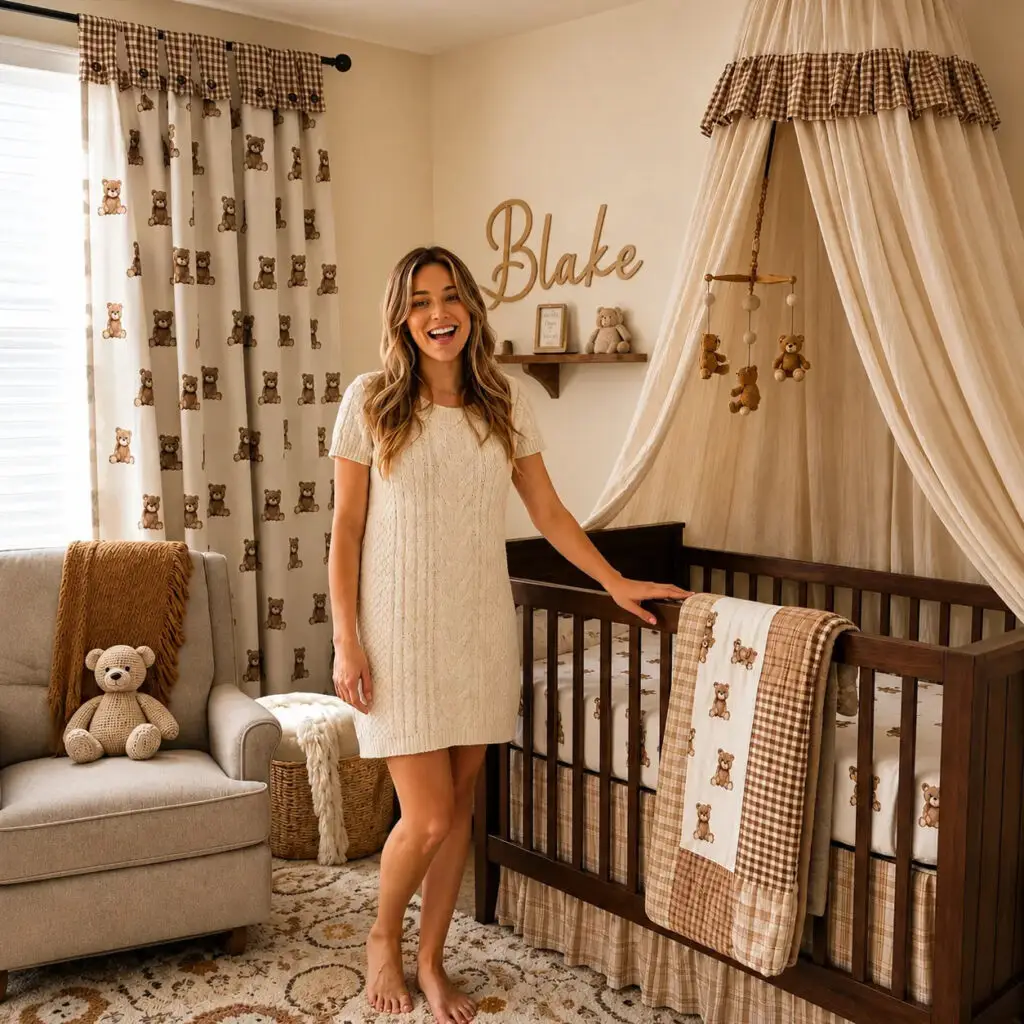
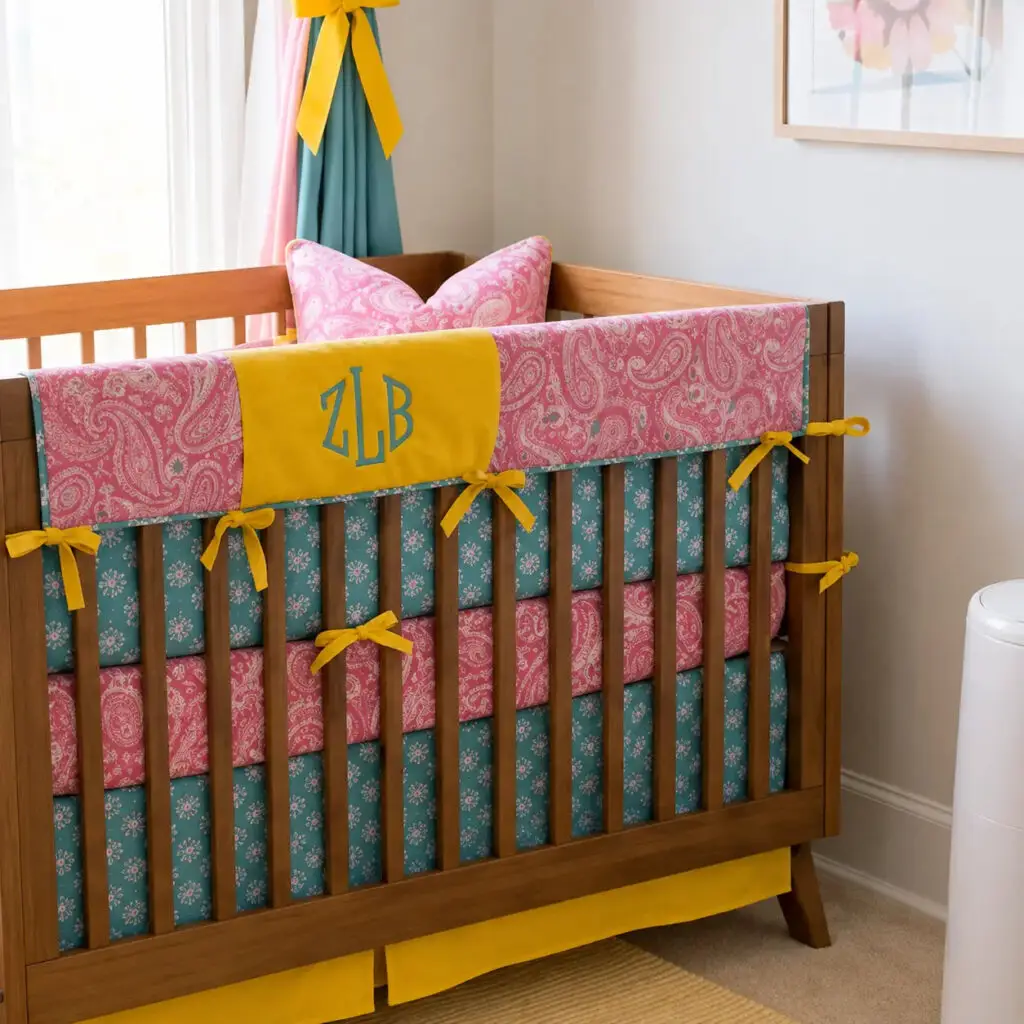
Most crib sets are designed to sell in large numbers, so they come in a handful of prints and a one-size-fits-most cut. Custom crib bedding works the other way around. It starts with your nursery: the wall color you already chose, the rug you fell in love with, the theme you keep coming back to. Then the bedding is made to fit all of it.
That freedom is exactly what makes the decisions feel big. Where do you start? How do you pair prints without the crib looking busy? Which pieces do you actually need? And when do you have to order? Here’s how to work through each one.
Start With the Room, Not the Fabric
It’s tempting to start by browsing fabrics, but the room itself should lead. Before you look at a single swatch, gather what’s already decided: your paint color, any furniture you’re keeping, the rug, the artwork, and the overall feeling you want, whether that’s calm and airy or bright and playful.
Save a few photos of nurseries you love, and look for what they have in common. You’ll usually find a pattern: the same two or three colors keep showing up, or every room you saved has a lot of natural wood and white. That pattern is your real brief. Custom crib bedding looks best when it pulls those threads together instead of competing with them.
Choosing Fabrics for Custom Crib Bedding
Crib bedding gets washed constantly, so fabric choice is about more than looks. A few guidelines help you choose well:
- Crib sheets: Tightly woven cotton, such as percale or sateen, is soft, breathable, and holds up to frequent washing. It’s the right choice for anything your baby sleeps directly on.
- Blankets: Here you have more room to play with texture, from soft minky to quilted cotton. Since a blanket isn’t used in the crib during the first year, it can be as plush and decorative as you like.
- Dust ruffles and rail covers: These pieces carry most of the color and pattern, so they’re where a bold print earns its place.
Ask how each fabric washes before you commit. Natural fibers can shrink slightly, which is why custom pieces are often cut to allow for it, and why you should always follow the care instructions that come with your set.
How to Pair Prints and Solids Without a Busy Crib
The easiest way to mix patterns is to give each one a job. Choose one statement print, the design everyone notices first. Add one supporting print in a smaller scale, such as a gingham, stripe, or tiny dot, that shares a color with the statement print. Then ground both with a solid pulled from the palette.
Scale matters as much as color. Two large prints side by side fight for attention, while a large print next to a small one looks deliberate. If you’d like a monogram or your baby’s name, place it where it can breathe, usually on the blanket or a solid panel, rather than on top of a busy pattern.
Which Custom Crib Bedding Set Do You Need?
A complete, finished crib usually comes down to three or four pieces. The fitted crib sheet is the only piece your baby sleeps on. The dust ruffle, also called a crib skirt, hides the space under the mattress and adds a tailored finish. The blanket ties the set together visually and becomes a keepsake. A crib rail cover protects the top rail of the crib from teething and adds one more layer of pattern.
If your crib’s rail is already protected, or you prefer a cleaner look, a 3-piece set is all you need. If your baby will be teething on that rail in a few months, the 4-piece set with a rail cover is worth it.
The Platinum sets at a glance
Platinum 3-Piece, $499: fitted crib sheet, blanket, and dust ruffle.
Platinum 4-Piece, $899: everything in the 3-piece set plus a crib rail cover.
Both are made to order in the design and fabrics you choose, and both are bumper-free.
Why Bumper-Free Is Non-Negotiable
Padded crib bumpers were once part of every matching set, but they’re now banned from sale in the United States under the Safe Sleep for Babies Act of 2022. The American Academy of Pediatrics recommends that babies under 12 months sleep on a firm, flat mattress with only a fitted sheet, with no bumpers, pillows, blankets, or soft toys in the crib.
That doesn’t mean giving up a beautiful crib. The dust ruffle, rail cover, and blanket carry the design, and the blanket can drape over the rail for photos or be used for supervised snuggles in a glider. Every Lively Distinct Designs set is bumper-free, so you never have to choose between a pretty nursery and a safe one. For more on this, see our guide to custom crib bedding.
Measure Your Crib Before You Order
A fitted sheet has to fit snugly to be safe, so accurate sizing matters. In the United States, a standard full-size crib mattress must measure at least 27 1/4 by 51 5/8 inches and no more than 6 inches thick, which is why most full-size sheets are cut for a roughly 28 by 52 inch mattress. Mini cribs and specialty cribs vary much more, so measure the actual mattress you’ll use.
For the dust ruffle, measure the drop from the top of the mattress support to the floor at the setting you’ll use first. If you plan to lower the mattress as your baby starts pulling up, mention it so the ruffle can be sized to look right at both heights.
When to Order Custom Crib Bedding
Custom pieces take an average of six to ten weeks from design approval to your door. Working backward from your due date, that means ordering by about week 20 to 22 of your pregnancy gives you comfortable breathing room, even if a fabric has to be reordered or a detail changed along the way.
A simple timeline looks like this:
- Weeks 14 to 18: Settle your theme and palette, and book a Bedding Brainstorm.
- Weeks 18 to 22: Approve your design and fabrics, and place your order.
- Weeks 28 to 32: Your bedding arrives. Wash it and set up the crib.
If your due date is closer than that, reach out anyway. The earlier you ask, the more options you’ll have.
Caring for Your Custom Bedding
Wash every piece before first use, following the care instructions included with your set. Cool water and a gentle cycle protect colors and trims, and a mild, fragrance-free detergent is kindest to a newborn’s skin. Having a second fitted sheet on hand makes those middle-of-the-night changes much easier.
Treated gently, custom crib bedding lasts well beyond the crib years. Many families keep the blanket as a keepsake long after the nursery has become a big-kid room.
The Easiest Way to Get Started